

Why Do Faucets Leak or Rust on Amazon? 5 Essential QC Tests B2B Buyers Should Confirm with OEM Suppliers

For Amazon faucet sellers and private-label brands, a leaking or corroded faucet can cost far more than one replacement. It can lead to returns, 1-star reviews, lower product rankings, and lost customer trust.
The challenge is that many problems cannot be found through appearance checks alone. A faucet may look perfect in the box but fail after installation, water pressure, repeated use, or exposure to moisture.
Before selecting an OEM faucet supplier, B2B buyers should therefore look beyond price and appearance and confirm that the following five quality control tests are built into the supplier’s process.
1. Water Pressure and Leakage Test
Common leakage points include the cartridge, valve body, hose connections, O-rings, and threaded fittings. A pressure and leakage test verifies whether the assembled faucet remains properly sealed under defined test conditions.
Buyers should confirm:
- Whether every finished faucet is tested or only sampled units
- The test pressure and duration according to international criteria, such as ASME A112.18.1-2024 / CSA B125.1.24 standards
- Whether results are recorded by production lot
- How failed units are isolated, corrected, and traced
The test method and acceptance criteria should be agreed upon before mass production according to the product design, target market, and customer requirements. This helps reduce dripping, connection leaks, and returns immediately after installation. To protect brand reputation and minimize returns, BYSON conducts a pre-shipment inspection of each finished faucet to help prevent leakage issues.
2. Cartridge and Handle Life-Cycle Test
A faucet may operate smoothly when new but develop problems after repeated use. The handle may loosen, become difficult to operate, or the faucet may begin to drip.
A life-cycle test repeatedly operates the handle to evaluate the durability of the cartridge, handle structure, and sealing components. After testing, buyers should confirm:
- Operating smoothness
- Handle looseness
- Leakage after closing
- Consistency between approved samples and production cartridges
This test helps reduce premature cartridge failure, loose handles, and early leakage complaints.
3. Corrosion and Salt Spray Test
What customers describe as “rust” may result from base-material corrosion, poor plating, coating damage, or chemical exposure. Salt spray testing helps evaluate the corrosion resistance of the faucet finish and exposed components.
Some lower-priced products may achieve cost savings by using raw materials that do not meet specified composition or purity requirements, reducing material or plating thickness, or simplifying finishing and quality-control processes. These differences may not be visible during an initial appearance inspection but can affect corrosion resistance and long-term durability.
Because chrome plating, PVD, painted finishes, stainless steel, brass, and zinc alloy products may require different conditions, buyers should confirm:
- The base material and finish system
- Whether the material composition and quality meet the product specifications
- Whether the plating or coating thickness meets the agreed requirements
- The test method and duration based on applicable standards, product specifications, and customer requirements
- Acceptance criteria for corrosion, blistering, peeling, and discoloration
- Whether testing is repeated after material or process changes
This test helps reduce rust spots, discoloration, peeling finishes, and negative reviews about product appearance. Through precise control of plating thickness and the use of PVD finishing options, BYSON enhances corrosion resistance and long-term surface durability.
4. Coating Adhesion, Thickness, and Surface Inspection
If plating or coating is too thin, poorly bonded, or unevenly applied, moisture and daily cleaning may quickly reveal peeling, scratches, stains, or color differences.
Surface inspection should cover more than general appearance. Important checkpoints include:
- Base material quality and compliance with applicable safety standards, such as NSF/ANSI/CAN 61 and NSF/ANSI 372
- Plating or coating thickness
- Coating adhesion
- Color and gloss consistency
- Scratches, stains, and surface coverage
Amazon customers often compare the delivered product directly with listing photos. Buyers should therefore approve a finish sample and define clear appearance standards before production to reduce “not as pictured” returns and reviews.
5. Dimensional, Assembly, and Final Function Inspection
Some problems only appear during installation. Threads may not fit, mounting parts may be missing, hoses may be the wrong length, or the faucet may feel unstable after installation.
Final inspection should include:
- Critical dimensions and thread specifications
- Hose, cartridge, and aerator specifications
- Correct hot and cold operation
- Handle and spout movement
- Included accessories and instructions
- Model, finish, labels, and barcodes
- Packaging protection during transportation
This inspection helps prevent installation failures, missing parts, incorrect shipments, and transit damage.
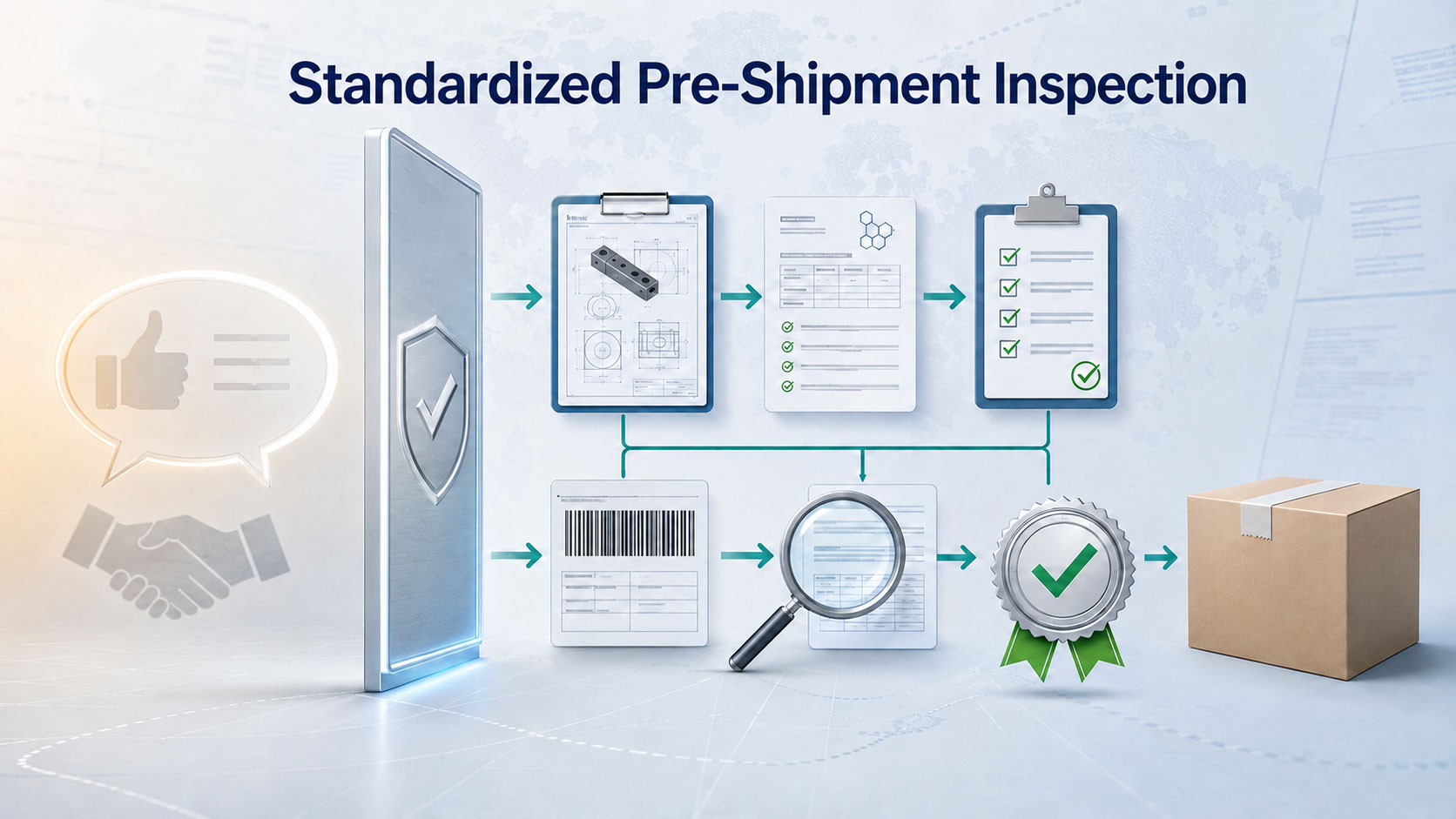
Instead of Accepting “Our Quality Is Good,” Confirm a Standardized Pre-Shipment Inspection Process
When evaluating an OEM faucet supplier, buyers should look for objective and verifiable quality controls rather than relying only on general claims.
Manufacturers with an ISO-certified quality management system and established SOPs for production and pre-shipment inspection are better positioned to maintain consistent product quality and complete inspection records.
These standardized procedures help buyers confirm that mass-produced products meet the approved specifications and samples. If a quality issue occurs, both parties can trace the production lot, identify the root cause, and take corrective action more efficiently.
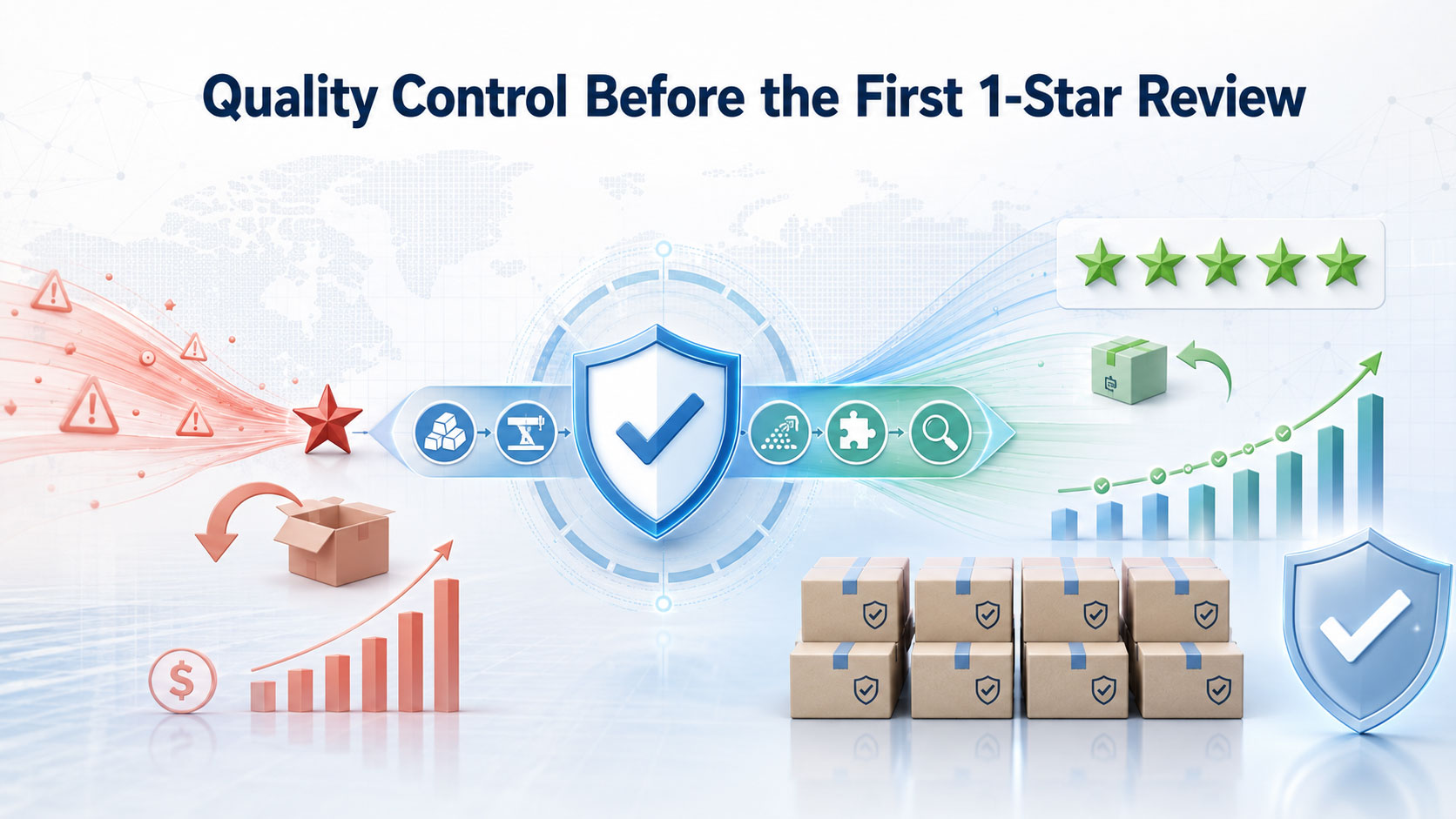
Prevent Quality Problems Before the First 1-Star Review
No quality control plan can eliminate every return. However, it can prevent many avoidable problems before shipment and support:
- Fewer leakage and corrosion complaints
- Lower return and replacement costs
- More consistent product ratings
- Stable quality as order volumes increase
BYSON International integrates quality control throughout the manufacturing process for faucets, plumbing fixtures, valves, and bathroom and kitchen accessories—from materials and machining to surface finishing, assembly, and final inspection.
For applicable products and agreed specifications, BYSON’s quality assurance process can include water testing and electroplating corrosion-resistance checks, helping online brands identify potential problems before shipment.
Planning a new OEM faucet project or experiencing leakage, corrosion, or batch-consistency issues with an existing product?
Contact BYSON International to discuss your product specifications, target market, testing requirements, and sample-development needs. Establishing clear and practical quality standards before mass production can help protect both your products and your brand.