

When Compliance Is Expected, Long-Term Stability Matters More in High-Use Workplace Faucet Selection
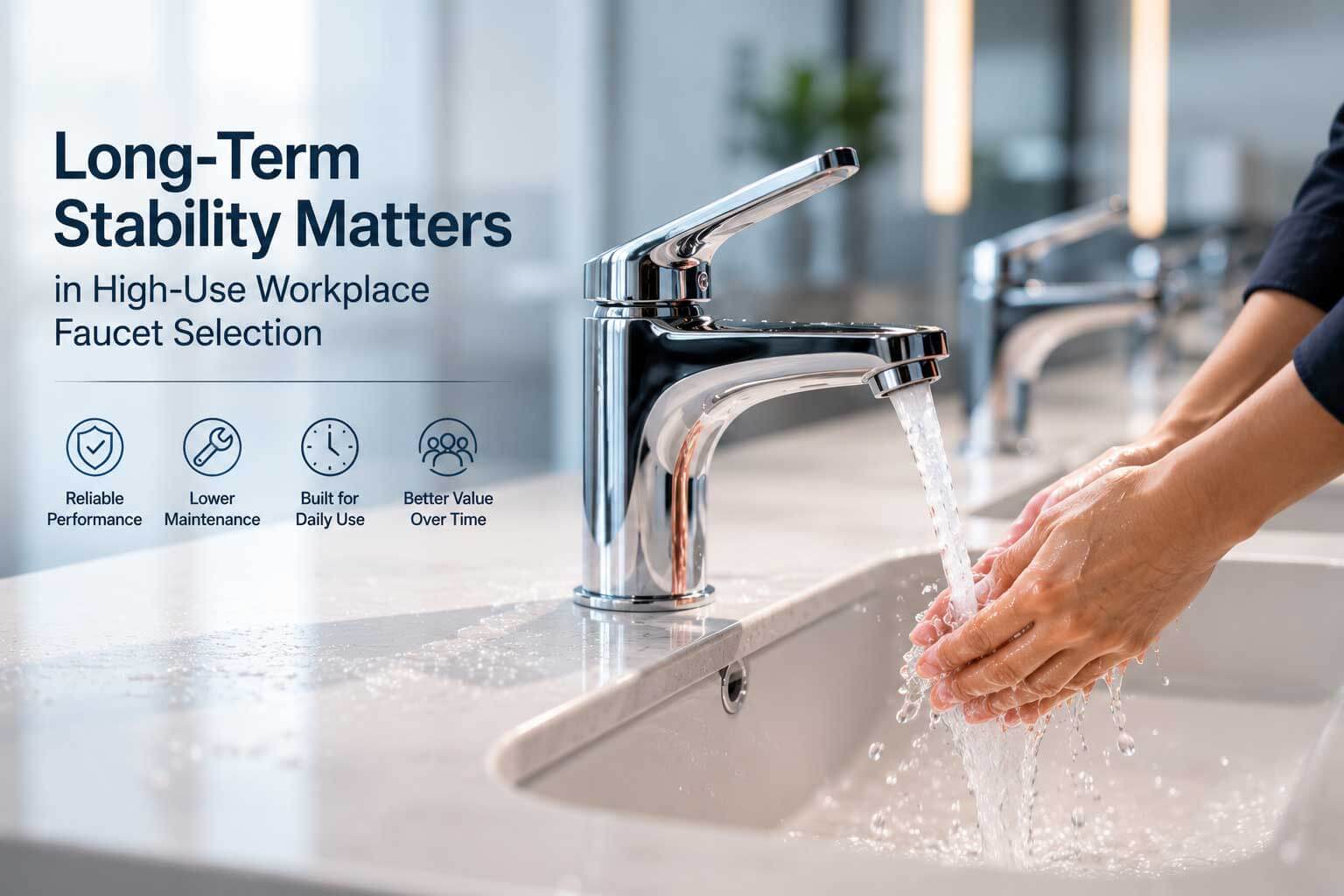
In commercial and project-based markets, expectations for faucets and bathroom hardware are already clearly defined. Water-saving performance, installation compatibility, durability standards, and regulatory compliance are not unique selling points. In most cases, they are basic requirements.
This is especially true in North America, where commercial and engineering projects often treat compliance and certification as part of the starting criteria for product selection. In that context, the more meaningful question is not simply whether a faucet can be specified for use, but whether it can continue performing reliably after installation.
Across hotels, office buildings, department stores, chain stores, and public facilities, repeated daily use is already part of normal operation. Under these conditions, buyers are often less concerned with whether a product meets baseline requirements, and more concerned with whether it can maintain stable performance while keeping maintenance demands under control over time.
The Difference Often Appears After Installation
At the specification stage, many products may appear similar. They may all meet basic requirements for installation, flow performance, and durability. However, actual performance often becomes clearer only after the product enters daily use.
In commercial environments, faucets are exposed to repeated operation, routine cleaning, long service hours, and shared use by different users. Over time, these conditions make practical differences easier to see. Smoothness of operation, consistency of water control, wear in key components, and maintenance frequency all become more visible after installation.
For this reason, the most meaningful differences in commercial faucet selection are often not revealed at approval, but through long-term use.
What Buyers Prioritize in High-Use Workplace Projects
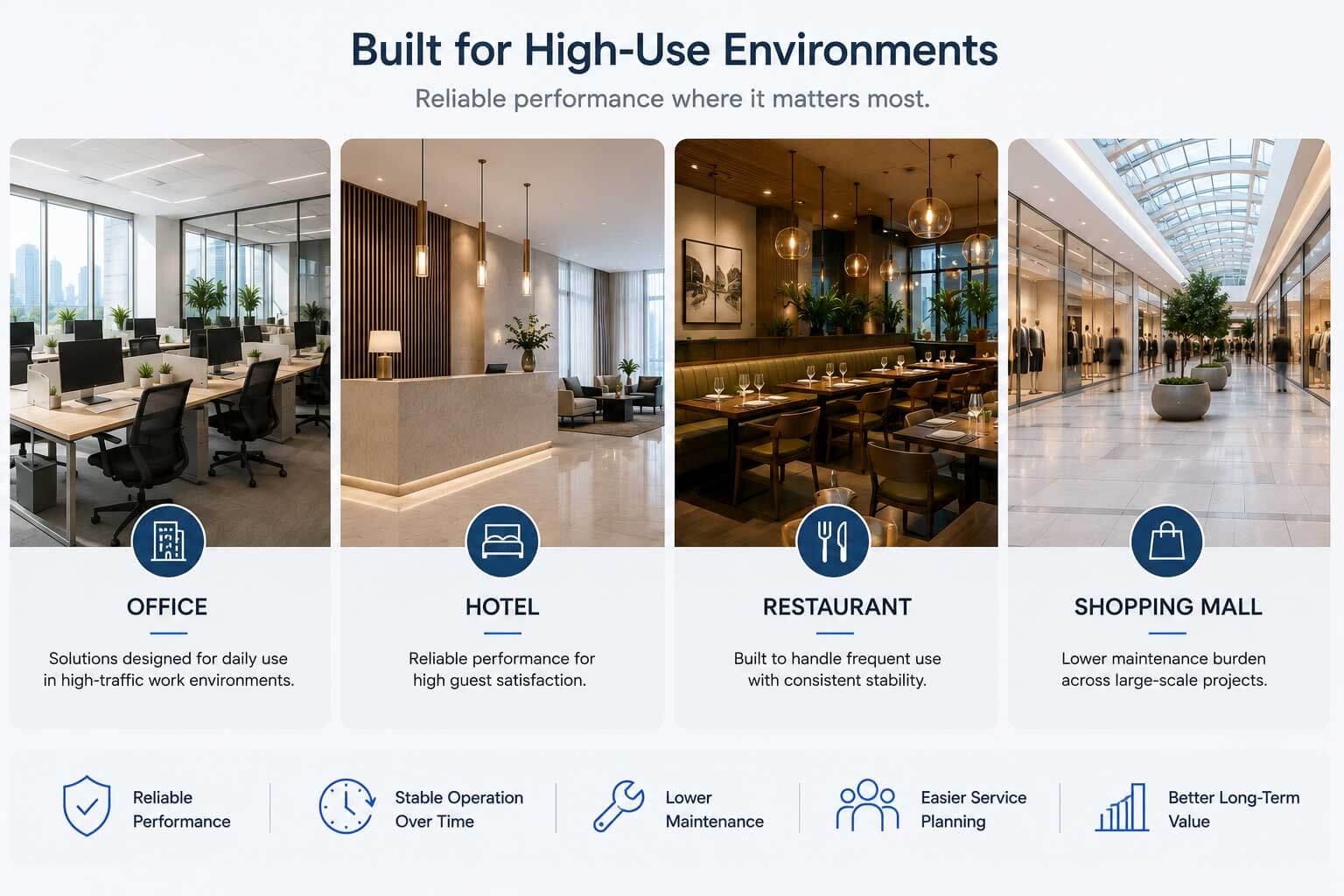
Once baseline requirements have been met, buyers often look more closely at factors such as:
- consistent operation after installation
- stable performance under repeated daily use
- lower maintenance frequency over time
- easier service and replacement planning
- reduced maintenance burden across multiple rooms or locations
These concerns are practical. In commercial applications, even small differences in long-term stability can become more noticeable when multiplied across larger projects and longer operating cycles.
Why Long-Term Stability Matters in Practice
In commercial settings, the cost of a faucet is not limited to purchase price or initial qualification. Once installed, it becomes part of daily operations. If performance becomes inconsistent or maintenance becomes more frequent, the impact is felt by operators, facility teams, contractors, and end users.
This is why long-term stability matters in a practical sense. It helps reduce maintenance pressure, supports smoother day-to-day operation, and makes service planning more manageable over time. For larger projects, this can also influence overall operating efficiency and long-term product value.
Rather than evaluating a faucet only by whether it meets project requirements at the beginning, many buyers also consider how reliably it can continue to perform throughout its service life.
What Supports Long-Term Stability
Long-term stability is usually shaped by what happens inside the product, not by appearance alone. In commercial applications, dependable performance over time is closely linked to product consistency, structural quality, and how easily the product can be maintained once in use.
Key factors that support long-term stability include:
- internal component consistency
- sealing performance over time
- material reliability under daily use conditions
- machining precision and assembly quality
- ease of maintenance and service access
These factors may not be the most visible at first glance, but they often have the greatest effect on long-term reliability and maintenance burden.
From Baseline Qualification to Long-Term Value
The table below shows how evaluation priorities often shift once baseline requirements are already assumed.
|
Evaluation Area |
Baseline Expectation |
What Buyers Often Focus on Next |
|
Market entry |
Meets required standards and project conditions |
Performs reliably after installation |
|
Installation |
Compatible with commercial specifications |
Remains manageable in daily operation |
|
Function |
Delivers expected initial performance |
Maintains consistency over time |
|
Product assessment |
Approved for project use |
Reduces maintenance burden and service frequency |
|
Cost consideration |
Purchase and qualification cost |
Long-term operating and maintenance impact |
This does not mean compliance is less important. It means that in many commercial discussions, compliance is already taken for granted. What buyers often evaluate next is whether the product can continue supporting stable use with a reasonable and predictable maintenance rhythm.
A More Practical Standard for Faucet Selection
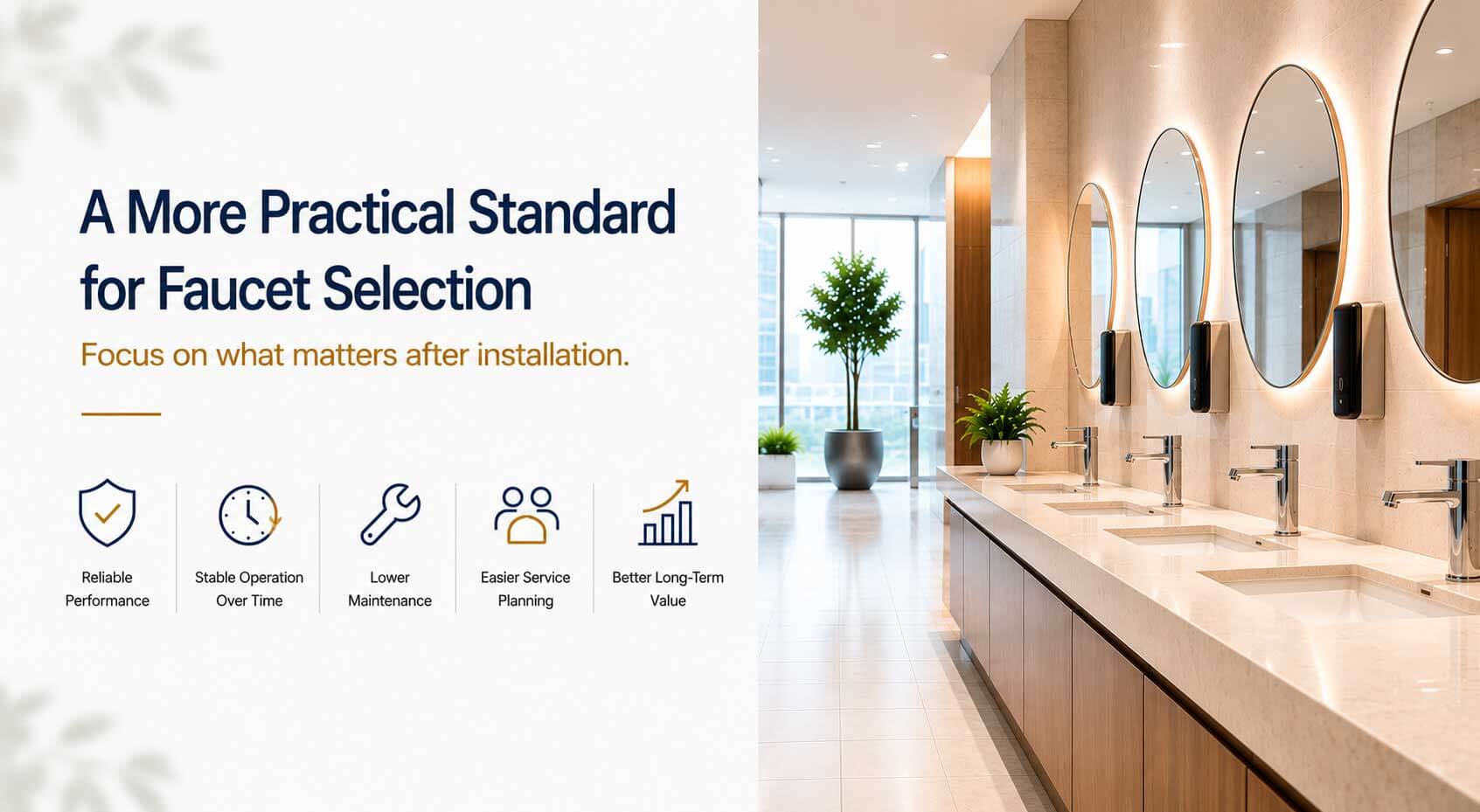
In commercial faucet selection, meeting the required standards is only the starting point. Once that baseline is in place, long-term stability becomes a more practical measure of product value.
For manufacturers and suppliers, this means the challenge is not only to deliver products that qualify for commercial use, but also to support products that can remain stable, serviceable, and lower-burden over time.
At Byson, we see long-term stability as an increasingly important direction in the development of commercial faucets and bathroom hardware. As compliance becomes a baseline expectation in many markets, buyers are placing greater value on consistent performance throughout the product lifecycle. In real-world operation, long-term stability is becoming one of the clearest measures of product value.