

Residential vs Commercial Bathroom Hardware: Key Differences in Durability, Maintenance, and Design
In modern space design, bathroom hardware is no longer just a functional accessory—it plays a crucial role in shaping the user experience and supporting the overall design language of a space. Different environments—from residential homes and hotels to restaurants and public spaces—have distinct requirements for bathroom hardware. These differences are especially evident in three key areas: durability, maintenance, and design.
This article compares residential and commercial bathroom hardware requirements, while also exploring how product design adapts to different usage scenarios across hotels, food & beverage spaces, and public environments.
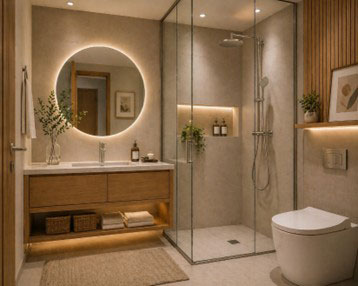
Residential Spaces: Comfort, Style, and Everyday Living
The core of residential bathrooms lies in daily comfort and cohesive design.
Key Requirements:
- Durability: Moderate usage with emphasis on long-term reliability
- Maintenance: Low frequency, but easy replacement is preferred
- Design: Highly important; must align with interior aesthetics
Design Solutions:
- Refined surface finishes (matte black, brushed gold, stainless steel, etc.)
- Smooth, user-friendly operation (e.g., faucet handle resistance)
- Attention to proportions and visual details
👉 Key Focus: Balancing aesthetics and functionality to create a consistently comfortable daily experience
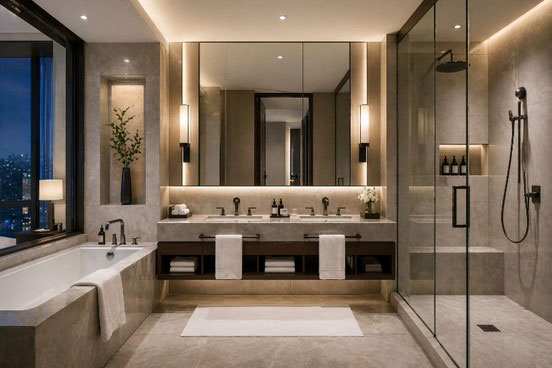
Hotel Spaces: Balancing Brand Image and High-Frequency Use
As a key type of commercial bathroom environment, hotel bathrooms must deliver both durability and visual consistency while reflecting the brand image.
Key Requirements:
- Durability: High (frequent daily use)
- Maintenance: Quick and efficient to minimize room downtime
- Design: Consistent and aligned with brand identity
Design Solutions:
- High-wear-resistant materials (e.g., chrome-plated brass, stainless steel)
- Modular design for fast part replacement
- Unified design language across all room types
In hospitality settings, maintenance efficiency is especially important because it directly affects room availability, operational cost, and guest experience.
👉 Key Focus: Achieving a balance of reliability, efficiency, and brand consistency
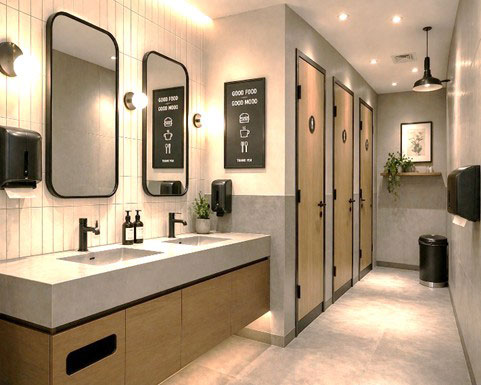
Food & Beverage Spaces: Built for Heavy Use and Easy Cleaning
Bathroom facilities in F&B environments experience intensive use and more complex conditions , frequent cleaning, and more demanding operating conditions.
Key Requirements:
- Durability: Very high (heavy traffic and frequent use)
- Maintenance: Simple and fast to avoid operational disruption
- Design: Secondary to function, but still requires basic quality appearance
Design Solutions:
- Anti-stain and fingerprint-resistant materials
- Simplified structures to reduce failure rates
- Easy-to-clean designs (minimizing gaps and hard-to-reach areas)
👉 Key Focus: Durability and ease of cleaning take priority over design details
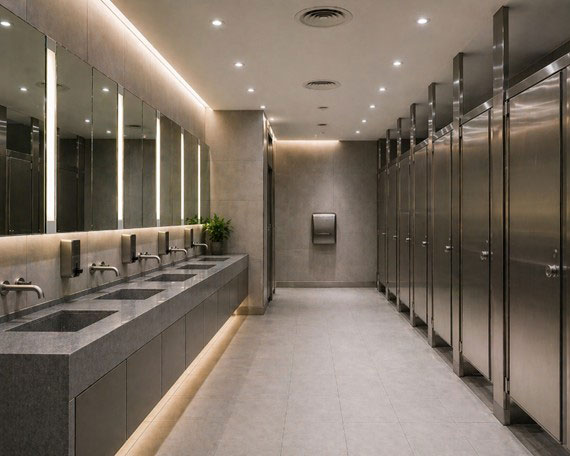
Public Spaces: Maximum Durability and Anti-Vandal Design
Public environments such as airports, train stations, and shopping malls face unpredictable, high-volume usage.
Key Requirements:
- Durability: Maximum (24/7 usage)
- Maintenance: Standardized and quickly replaceable
- Design: Clean, neutral, and timeless
Design Solutions:
- Anti-vandal features (anti-loosening, anti-theft)
- High-strength materials (e.g., heavy-duty stainless steel)
- Standardized specifications for efficient large-scale maintenance
👉 Key Focus: Extreme durability and low maintenance cost
Cross-Environment Comparison
The comparison below shows how residential bathroom hardware differs from commercial bathroom hardware, with hotels, F&B spaces, and public areas representing different levels of commercial demand.
| Environment | Durability | Maintenance | Design Importance |
| Residential | ★★★ | ★★ | ★★★★★ |
| Hotel | ★★★★ | ★★★★ | ★★★★★ |
| Food & Beverage | ★★★★★ | ★★★★ | ★★★ |
| Public Spaces | ★★★★★ | ★★★★★ | ★★ |
Core Design Thinking: Start with the Usage Scenario
Exceptional bathroom hardware design goes beyond materials and appearance—it begins with a deep understanding of real-world usage scenarios in both residential and commercial applications.
Key Considerations:
- Frequency of use (low vs. high)
- User type (private households vs. general public)
- Maintenance conditions (managed vs. public maintenance)
- Space positioning (private vs. commercial branding)
As a result, brands often develop dedicated product lines for different markets rather than applying a one-size-fits-all approach.
How Byson Supports Different Bathroom Hardware Applications
At Byson, we understand that the requirements for residential bathroom hardware and commercial bathroom hardware are not the same. Each application has its own priorities in durability, maintenance, and design, and these differences should be considered from the early stage of product development.
As a bathroom hardware manufacturer, Byson focuses on aligning material selection, structural design, and surface finishing with real application needs. From residential spaces that emphasize style, finish, and user comfort to commercial environments such as hotels, restaurants, and public spaces that require higher durability, easier maintenance, and more standardized specifications, Byson approaches product development with both functionality and application fit in mind.
This application-based approach helps ensure that each product is better suited to its intended environment, both in performance and in design.
Choosing the Right Product Matters More Than Choosing the Most Expensive
Residential bathroom hardware and commercial bathroom hardware differ significantly in the logic behind product selection. Professional planning is not about choosing the highest specification, but about selecting the most suitable solution based on the actual application, usage frequency, and maintenance needs.
Whether creating a comfortable home or enhancing efficiency and brand image in commercial spaces, understanding these differences is the first step toward making the right choice.