

When Compliance Becomes the Baseline: How Rising Global Regulations Are Reshaping Plumbing Supply Chains
Why More Products Fail to Launch Despite Being “Ready”
In recent years, a growing issue has emerged in the plumbing industry: products that are fully designed and manufactured but still cannot enter the market. For many brands and importers, the main bottleneck is no longer design capability or manufacturing capacity—it is regulatory compliance.
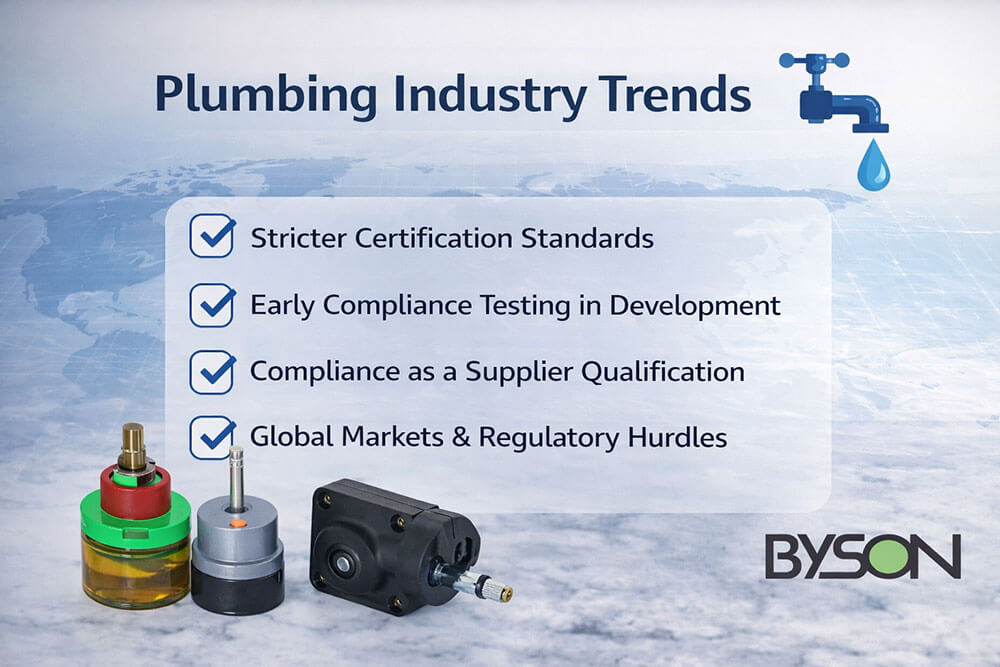
Across North America and other global markets, requirements for plumbing accessory products such as faucets, valves, and shower components are becoming stricter. Certification processes that once took place near the end of product development are now moving earlier into the design stage, while audits and testing requirements continue to increase.
As a result, companies that treat certification as a final checklist often face costly delays. Products that appear production-ready may still fail regulatory approval, forcing redesigns, retesting, and postponed launches.
This shift is fundamentally changing how plumbing brands select manufacturing partners and structure their supply chains.
Structural Changes in Plumbing Regulations and Certifications
Rising Standards in North America and Global Markets
Regulatory frameworks governing plumbing accessory products have evolved significantly over the past decade, especially in North America.
Organizations such as cUPC, NSF, and other certification bodies are strengthening both testing protocols and audit procedures. These changes reflect broader industry concerns around water safety, material traceability, and long-term product reliability.
For example:
- cUPC certification, issued under the Uniform Plumbing Code, ensures plumbing products meet safety and performance standards required for installation in the United States and Canada.
-
NSF certifications, particularly NSF/ANSI standards for drinking water system components, focus heavily on material safety and contamination prevention.
According to industry documentation from the International Association of Plumbing and Mechanical Officials (IAPMO), certification processes now emphasize comprehensive product evaluation and ongoing compliance verification rather than one-time approvals.
Certification Is Moving Earlier in the Development Process
Traditionally, manufacturers completed product design before applying for certification testing. Today, however, many certification bodies recommend or require pre-compliance evaluation during the design phase.
This shift means that aspects such as:
- material composition
- water contact safety
- pressure performance
- manufacturing traceability
must be considered long before mass production begins.
For plumbing brands and importers, this change significantly increases the importance of working with suppliers who already understand regulatory expectations.
The Real Impact on Brands and Importers
While regulatory tightening improves safety and product quality across the industry, it also introduces hidden operational costs for companies that are unprepared. When a plumbing accessory product fails certification late in development, several costly consequences can follow.
Common Consequences of Late Compliance Issues
| Challenge | Operational Impact |
| Product redesign | Additional engineering time and tooling adjustments |
| Retesting fees | Certification laboratories often require full retesting |
| Delayed product launches | Missed seasonal sales windows |
| Inventory disruption | Production batches cannot be shipped |
| Brand reputation risk | Retailers and distributors face supply uncertainty |
These challenges are particularly significant for companies entering regulated markets such as the United States and Canada. In competitive retail channels, timing matters. A delayed product launch may cause brands to miss key selling periods or lose shelf space to competitors.
How the Plumbing Supply Chain Is Shifting Toward “Compliance by Design”
In response to tightening regulations and rising certification risks, the plumbing industry is gradually shifting its supply chain strategy—from reactive compliance management to a “compliance by design” approach. Instead of addressing certification requirements only after a product has been developed, leading manufacturers now integrate regulatory considerations directly into the early stages of plumbing accessory development. This means factors such as material selection, engineering design, tooling development, and quality control systems are evaluated with certification requirements in mind from the beginning. By embedding compliance into the product development process, manufacturers can significantly reduce the risk of failed certification, unexpected redesigns, and costly delays.
This shift is also changing how brands and distributors evaluate their suppliers. When sourcing plumbing accessory products for international markets, buyers are no longer focused solely on price or production capacity. Increasingly, they are looking for partners with experience navigating global certification systems, strong material documentation and traceability, internal testing capabilities, and stable quality management processes. Suppliers that lack these capabilities may still be able to produce technically sound products, but they introduce compliance uncertainty—something many brands and importers can no longer afford in today’s regulatory environment.
Why “One-Step Compliance Capability” Is Becoming Essential
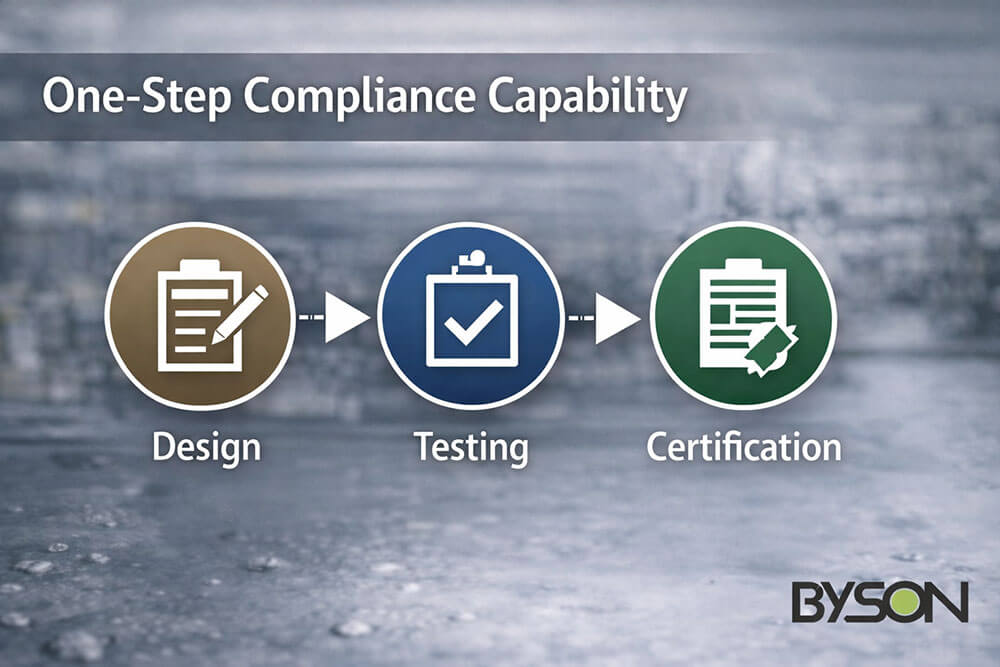
As certification standards become more complex, brands are increasingly seeking suppliers that can support complete compliance workflows, including:
- design-stage regulatory consultation
- material compliance verification
- certification preparation and documentation
- coordination with testing laboratories
This concept is sometimes referred to as “one-step compliance capability.”
Rather than managing multiple external consultants and testing partners, brands prefer working with manufacturers who already understand regulatory frameworks and can integrate them into the production process.
In highly regulated markets, this capability can significantly reduce:
- product launch risks
- certification delays
- development costs
How Byson Supports Compliance-Ready Plumbing Products
At Byson, we have seen firsthand how regulatory changes are reshaping expectations for plumbing manufacturers.
Instead of treating certification as a final step, we integrate compliance considerations into the early stages of plumbing accessory development. From material selection to production planning, our teams focus on ensuring that products are prepared for the regulatory environments of major global markets.
For brands and importers targeting North America and other regulated regions, working with a supplier who understands certification requirements can simplify development timelines and reduce unexpected delays.
If you are exploring reliable manufacturing partners for plumbing components or accessories, we welcome you to learn more about our capabilities or discuss your project requirements.
Compliance Is Becoming the New Baseline in Supplier Selection
As global regulations continue to tighten, the plumbing industry is entering a new phase where regulatory readiness is no longer optional. For brands and importers operating in markets such as North America, the ability to launch compliant plumbing accessory products efficiently has become a critical factor in maintaining competitiveness. Certification requirements, documentation standards, and audit expectations are steadily increasing, making compliance management an essential part of product development rather than a final administrative step.
As a result, compliance capability is gradually becoming a basic qualification for entering global supply chains, not simply an added advantage. Over the long term, suppliers that integrate regulatory knowledge, stable manufacturing systems, and proactive development support will be better positioned to build lasting partnerships with international brands.